Across the UK, historic buildings are being rediscovered as powerful drivers of economic, social and cultural renewal. When sensitively restored and repurposed, heritage assets can become thriving innovation centres for businesses – particularly those in the creative industries – while safeguarding local history, strengthening communities and supporting sustainable growth.
According to the recent Heritage Works for Creative Businesses report published by Historic England, around a quarter of all creative businesses in the UK are based in heritage conservation areas and listed buildings attract significantly more creative firms than non-listed buildings. Far from being a constraint, heritage can be a catalyst for innovation and entrepreneurship.
Creative industries are one of the UK’s economic strengths, contributing around £125 billion a year and employing approximately 2.4 million people. These businesses often seek out spaces that inspire, from distinctive architecture and characterful interiors to central locations embedded in the life of a place.
Regeneration that benefits people, places and the economy
The Historic England report shows that many creative business hubs are located in buildings once considered ‘challenging assets’, structures that lacked obvious commercial uses and were at risk of decline. Creative reuse has proven to be a particularly effective route for bringing these buildings back to life.
Bringing heritage buildings back into use delivers a range of social and economic benefits. It protects valued landmarks, reinforces local identity, can contribute to increased footfall in town centres, supports small business growth, generates local jobs and creates spaces that the wider community can enjoy. Heritage-led regeneration can therefore be a win win.
Historic England’s guidance also highlights how planning flexibility, heritage “at risk” registers and blended funding models can help unlock projects. Public private partnerships, grant funding and strong feasibility work can transform underused historic assets into viable, sustainable business spaces.
A historic transformation in Greater Manchester: Ashton Old Baths
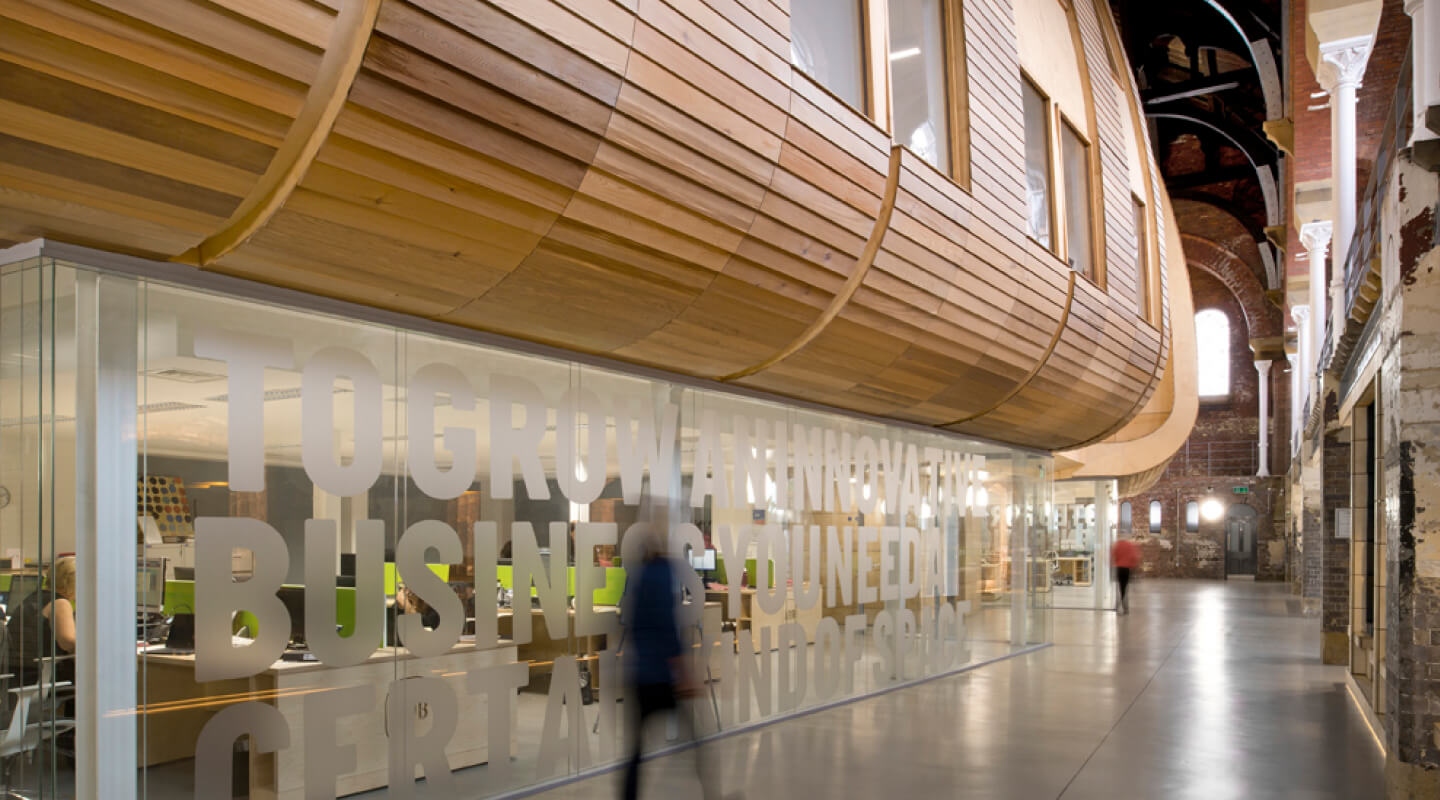
One of the centres showcased in Historic England’s report is Ashton Old Baths, which is managed by Oxford Innovation Space. Housed in a Grade II listed building that dates back to 1870, Ashton Old Baths innovation centre in Greater Manchester has transformed a disused public bathhouse into a thriving innovation hub for businesses in the digital and creative industries.
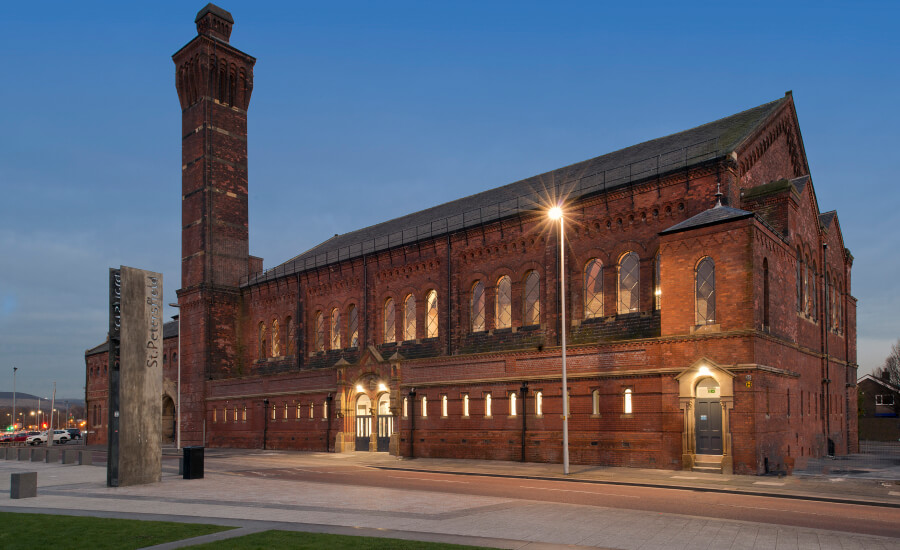
Thanks to funding secured by Tameside Metropolitan Borough Council, the project repurposed a much-loved landmark that had been closed for 40 years and on the English Heritage at-risk register – placing it back at the heart of the community.
Since opening in 2017, the centre has been supporting local people to start and grow a business, helping the area retain local talent, inspiring the next generation through its work with schools and regularly hosting community events. Providing flexible workspace alongside business support, the centre has created a vibrant entrepreneurial ecosystem and is currently home to 27 businesses. In fact, 79% of businesses that have graduated from the centre have stayed in the Tameside area – indicating long-term impact on the region.
By repurposing a historic landmark into a dynamic innovation space, the centre has created a model for sustainable regeneration and social value delivery. It illustrates how public-private sector collaboration can drive good growth.
A Victorian home for creative businesses: Vulcan Works
In Northampton, Vulcan Works has breathed new life into a historic Victorian warehouse in the heart of the town’s Cultural Quarter. This £14 million regeneration project, championed by West Northamptonshire Council and the South East Midlands Local Enterprise Partnership, provides more than 51,000 sq. ft. of dedicated workspace and has become a haven for artistic, digital and creative businesses.
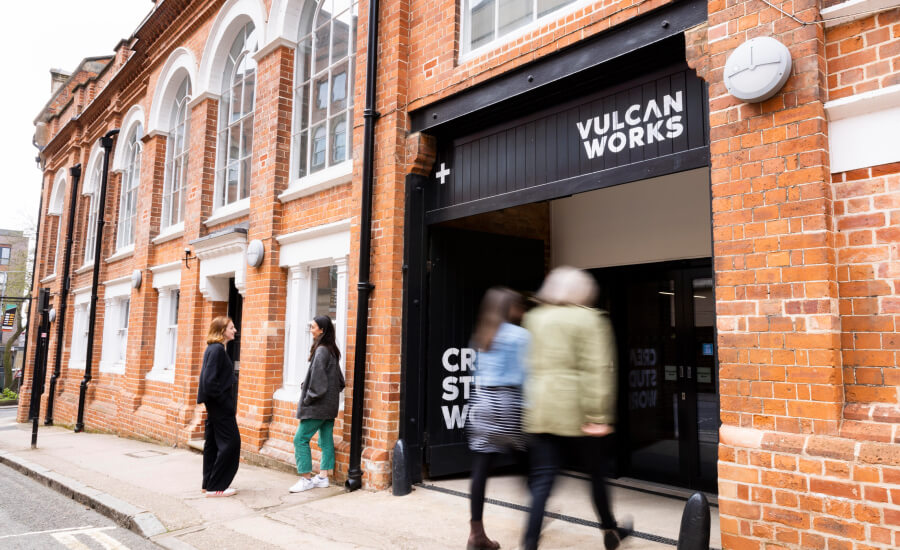
The impact of Vulcan Works can already be seen in terms of attracting people into the area. Footfall monitors in the town centre indicate increased activity to the Cultural Quarter since Vulcan Works opened in February 2023. What is more, the centre supported around 75 direct and indirect jobs and accommodated 33 office based businesses and 27 co-workers in its first year alone.
The centre has quickly established itself as a key part of the local business community. A fact that was reinforced at the Northamptonshire SME Awards, where the centre was presented with the Gold Positive Impact Award.
From officers’ mess to innovation space: BASE Bordon
BASE Bordon Innovation Centre, located in the former Officers’ Mess at the historic Louisburg Barracks, demonstrates how military heritage can also be successfully reimagined for modern enterprise.
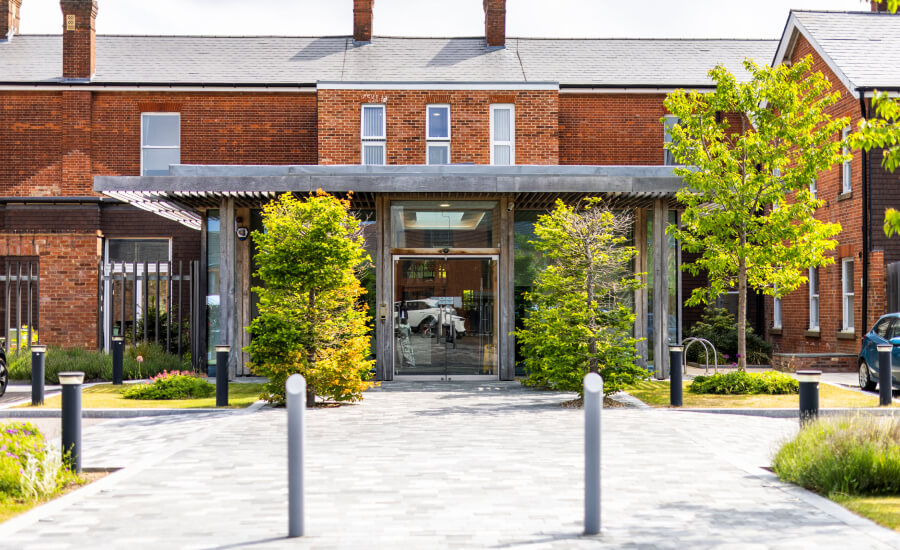
Part of a wider regeneration project following the departure of the army in 2015, BASE Bordon was created through a partnership between Homes England, Enterprise M3 LEP and East Hampshire District Council. Oxford Innovation Space supported the project from the outset, delivering feasibility work that helped make the case for reuse rather than demolition.
Today, the centre blends preserved architectural features with modern business facilities, providing flexible workspace for local entrepreneurs and helping ensure Bordon becomes a place where people can both live and work.
A win-win for heritage and future growth
By combining thoughtful design, strong public‑private partnerships and long‑term business support, historic buildings can be reimagined to deliver lasting value for people, places and local economies. At Oxford Innovation Space, we work with local authorities, developers and funders to ensure heritage assets are not only preserved, but actively contribute to good growth and resilient communities.
Talk to us about a heritage regeneration project
If you have a historic building with the potential to support enterprise and community growth, we can help you explore viable, sustainable options, from early feasibility through to long‑term management.